When it comes to spiral-shaped pasta, two names often create confusion: fusilli and rotini. At first glance, they may look almost identical, but there are several differences in shape, texture, origin, and best uses.
In this guide, we’ll break down the key differences between fusilli vs rotini so you can choose the right pasta for your next meal.
What Is Fusilli?
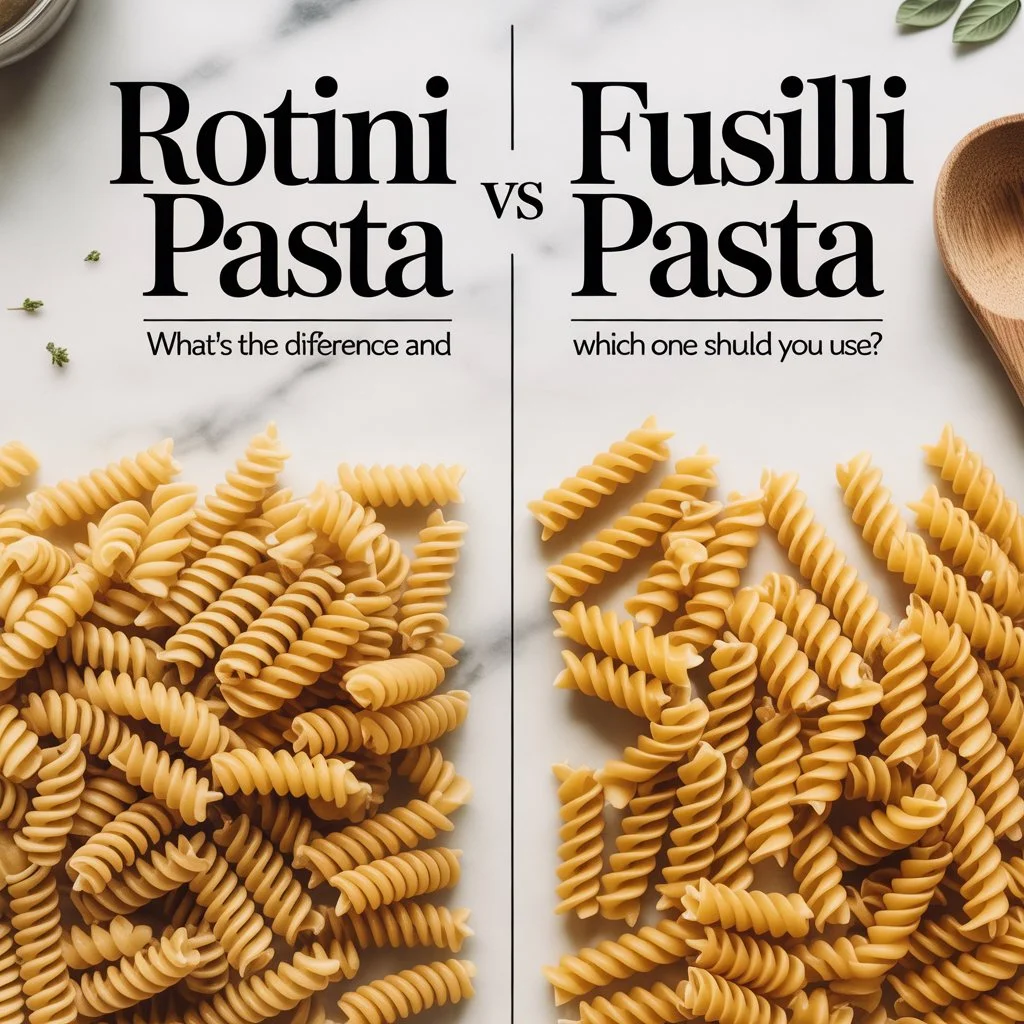
Fusilli is a traditional Italian pasta known for its tight corkscrew shape. The word “fusilli” comes from the Italian word fuso, meaning spindle, which refers to the method originally used to twist the pasta by hand.
Traditional fusilli usually has:
- Tighter spirals
- A denser texture
- Slightly shorter twists
- A more artisanal appearance
Fusilli is excellent for holding thick sauces, pesto, and creamy dishes because its grooves trap sauce effectively.
Best Dishes for Fusilli
- Pesto pasta
- Creamy Alfredo dishes
- Baked pasta casseroles
- Pasta salads
What Is Rotini?
Rotini is another corkscrew-shaped pasta, but it is more common in American cuisine. Compared to fusilli, rotini typically has:
- Wider twists
- A looser spiral shape
- Slightly smoother texture
- Longer corkscrew patterns
Rotini is widely used in pasta salads, tomato-based sauces, and quick family meals because it cooks evenly and holds ingredients well.
Best Dishes for Rotini
- Pasta salads
- Marinara-based dishes
- Macaroni-style recipes
- Vegetable pasta bowls
Fusilli vs Rotini: Main Differences
| Feature | Fusilli | Rotini |
|---|---|---|
| Origin | Traditional Italian | Popularized in America |
| Shape | Tight corkscrew | Wider spiral |
| Texture | Denser | Slightly lighter |
| Sauce Holding | Excellent | Very good |
| Common Use | Gourmet dishes | Everyday meals |
Which Pasta Holds Sauce Better?
Both pastas are great at holding sauce, but fusilli generally performs better with thicker and creamier sauces because of its tighter spirals and deeper grooves.
Rotini works especially well with lighter sauces and cold pasta salads where ingredient distribution matters more.
Is Fusilli the Same as Rotini?
Technically, no. While both belong to the spiral pasta family, their shape and culinary uses are slightly different. Many grocery stores may use the names interchangeably, but pasta enthusiasts and chefs usually distinguish between the two.
Which One Should You Choose?
Choose fusilli if:
- You want authentic Italian-style pasta
- You’re making creamy or thick sauces
- You prefer a firmer texture
Choose rotini if:
- You’re preparing pasta salad
- You want a versatile everyday pasta
- You need pasta that cooks quickly and evenly
Final Thoughts
The debate around fusilli vs rotini comes down to texture, shape, and cooking purpose. While both are delicious spiral pastas, fusilli offers a more traditional Italian feel, while rotini is practical and versatile for everyday cooking.
For more pasta guides, recipes, and pasta comparisons, visit Pasta Passion — a dedicated resource for pasta lovers exploring different pasta shapes, cooking tips, and Italian food culture.
Comments on “Fusilli vs Rotini: What’s the Difference Between These Spiral Pastas?”